
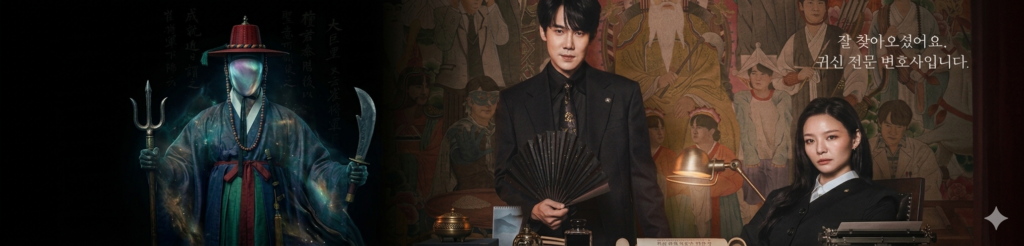
The Divine Mediators: An Ultimate Guide to Korean Shamanism (Mudang) – From Ancient Rituals to “Phantom Lawyer”
The supernatural legal thriller “Phantom Lawyer” (2026) has redefined the K-drama landscape, reaching a staggering 12.8% viewership rating. While the charismatic acting of Yoo Yeon-seok as Shin I-rang provides a thrilling narrative, the true heart of the show lies in its deep roots within Korean Shamanism, or Musok. For international fans, the sight of a lawyer operating out of a former shaman’s sanctuary and sensing the unseen might seem like pure fantasy but in Korea, this is a cultural reality that spans over five millennia. This guide provides an exhaustive, 2,000-word exploration of the Mudang—the real-life “ghost whisperers” of Korea.
- 1. The Living History: Roots and Evolution of Musok
- 2. The Shaman’s Identity: Calling, Types, and Spirit Sickness
- 3. The Archetypal Myth: Princess Bari (Bari-gongju)
- 4. Ritual Grandeur: Decoding the “Twelve Rounds” of Gut
- 5. Modern Renaissance: From Taboo to Global K-Icon
- * Sources & Official References
1. The Living History: Roots and Evolution of Musok
Korean Shamanism is not merely a religion; it is the primordial consciousness of the Korean people. To understand the “Phantom Lawyer,” one must first understand that in the Korean worldview, the boundary between the living and the dead is as thin as a sheet of traditional Hanji paper.
The Prehistoric Sovereigns
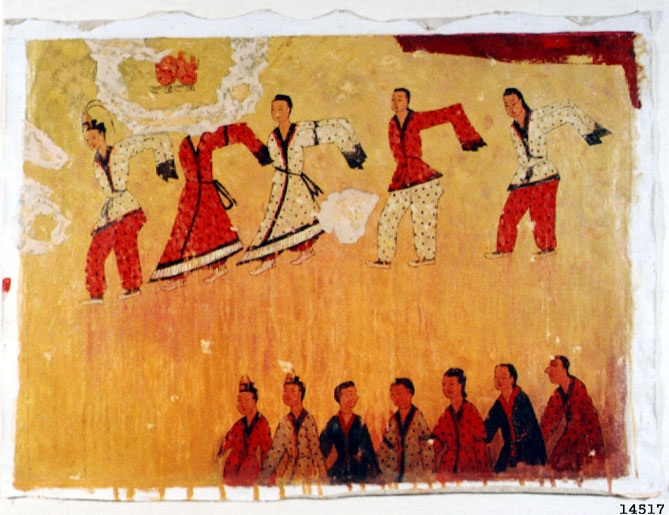
The origins of the Mudang trace back to the dawn of the Korean peninsula. In ancient tribal states such as Gojoseon, Buyeo, and Goguryeo, the roles of political leader and religious priest were unified. These leaders, known as Cheongun (Heavenly Princes), were believed to have been appointed by the heavens to maintain cosmic balance. National festivals like Yeonggo (Spirit-invoking Drums) and Mucheon (Dance to Heaven) were massive shamanic rites where the entire community participated in singing and dancing to ensure a good harvest and national security.
The Struggle for Survival: Goryeo to Joseon
During the Goryeo Dynasty, shamanism enjoyed a degree of official status. The state operated the Seongsu-cheong, a royal shrine where shamans prayed for the longevity of the king and the prosperity of the nation. However, with the rise of the Joseon Dynasty and its strict Neo-Confucian ideology, shamanism faced its first major persecution. The ruling elite categorized Musok as “Eumsa” (lewd or illicit rituals). Despite this, the Mudang remained indispensable. Even the most stoic Confucian scholars secretly sought out shamans when a family member fell ill, and the royal women continued to patronize powerful “National Shamans” (Guk-mu).
Modern Suppression and Rebirth
The 20th century was perhaps the darkest era for Korean shamans. During the Japanese colonial period, shamanism was suppressed as part of an effort to erase Korean cultural identity. Later, in the 1970s, the “Saemaul Movement” (New Village Movement) targeted shamanism as a “backward superstition” that hindered modernization. Thousands of shrines were destroyed. However, the 1980s saw a dramatic reversal. Scholars and artists began to recognize Musok as the “Ur-culture” (original culture) of Korea, leading to its designation as an Intangible Cultural Heritage.
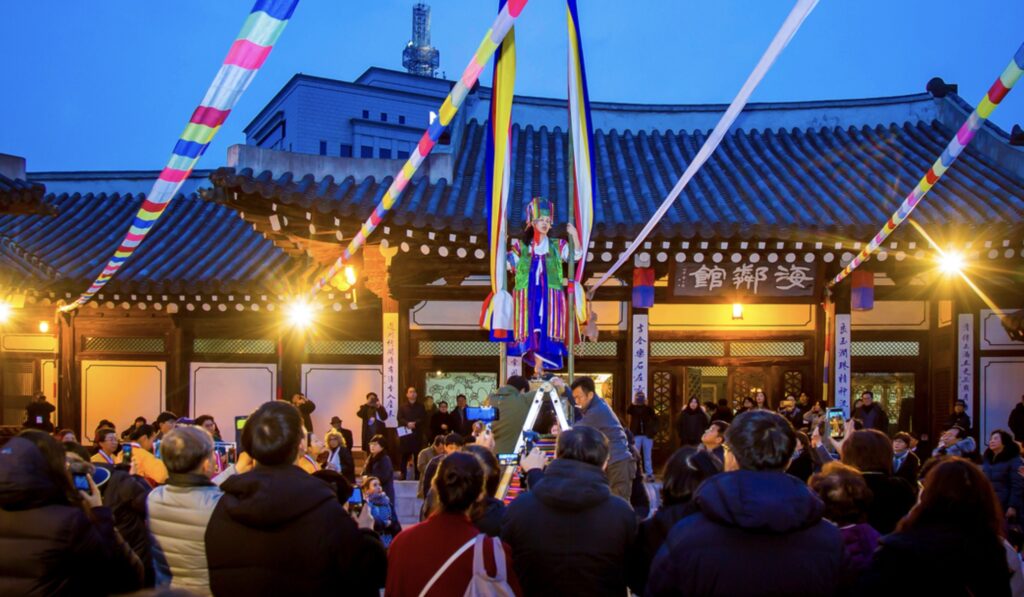
2. The Shaman’s Identity: Calling, Types, and the Spirit Sickness
In Phantom Lawyer, Shin I-rang’s ability to see and house spirits is depicted as a double-edged sword. This mirrors the real-life experience of becoming a Mudang, which is rarely a choice but rather an inescapable destiny.
Shin-byeong: The Divine Trauma
The most distinctive feature of Korean shamanism is Shin-byeong (신병), often translated as “Spirit Sickness.” It is a psychosomatic phenomenon where an individual experiences extreme physical pain, mental wandering, or vivid hallucinations that modern medicine cannot cure. According to traditional belief, this sickness is a sign that a deity or an ancestor spirit has “entered” the person. The only “cure” is to accept the spirit and undergo the Naerim-gut (initiation ritual). To refuse is to invite lifelong suffering or even madness.
Types of Shamans: Gangsin-mu vs. Seseup-mu
Korean shamans are broadly classified into two categories based on their initiation:
- Gangsin-mu (Possessed Shamans): Mostly found in northern regions. They are “called” through Shin-byeong. Their power lies in direct spirit mediumship. During a ritual, they lose their own identity and become a vessel for a specific god. Their words, Gongsu, are treated as divine oracles.
- Seseup-mu (Hereditary Shamans): Mostly found in southern regions. They inherit the role through family lineage. They are master performers trained in music and dance, acting as ritual priests who entertain the gods.
3. The Archetypal Myth: Princess Bari (Bari-gongju), the First Shaman
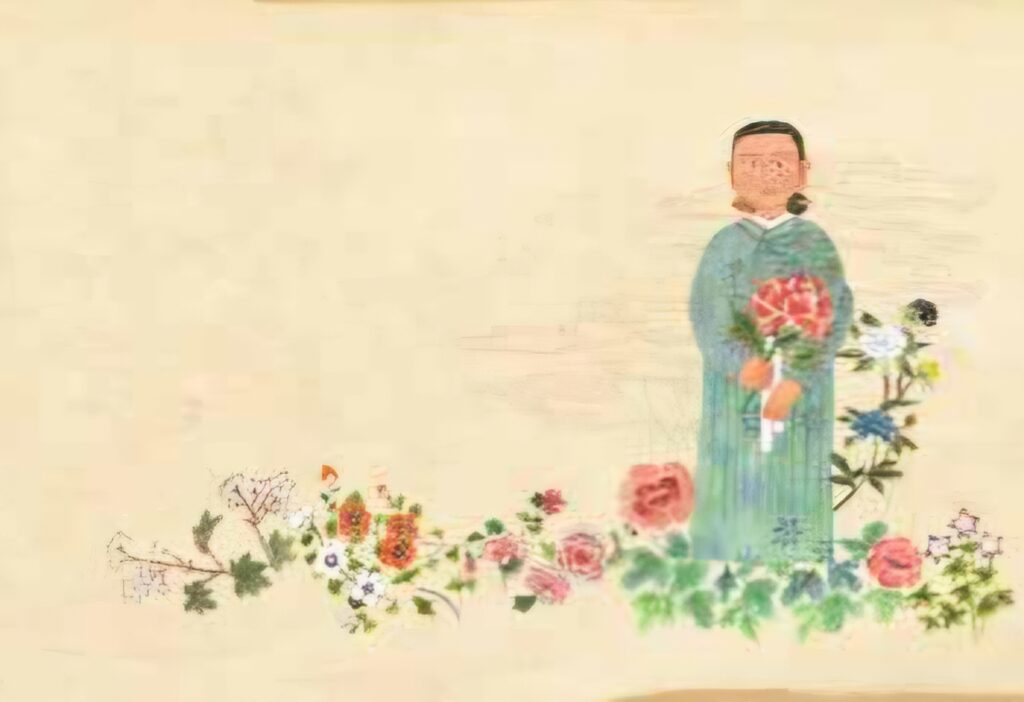
The narrative backbone of almost every funeral-related ritual in Korea is the Bari-gongju (Princess Bari) myth. She is the spiritual ancestor of all shamans and the patron saint of those who guide souls to the afterlife—the original “Phantom Lawyer.”
The Legend of the Abandoned Princess
According to the myth, King Ogu and Queen Gil-dae were desperate for a male heir. However, they were cursed to have seven daughters. When the seventh daughter, Bari, was born, the king was so enraged that he ordered her to be thrown into the sea. Fortunately, Bari was rescued by an elderly couple and grew up with extraordinary compassion.
Years later, the King and Queen fell deathly ill. A divine oracle revealed that the only cure was the “Life-Giving Water” from the Western Heaven—a place no mortal could reach. While the six elder sisters refused the dangerous quest, Bari, despite having been abandoned, volunteered to save her parents.
The Journey Through the Underworld
Bari’s journey is a harrowing epic. She dressed as a boy, crossed the “River of No Return,” and labored for nine years for the Guardian of the Underworld. She bore seven sons to fulfill her duty and finally obtained the sacred water and the flowers of life. When she returned, her parents had already passed away. However, she used the Life-Giving Water to resurrect them.
Symbolism and Legacy
Instead of accepting a royal title, Bari chose to become a goddess who guides the souls of the dead to the Western Paradise. She represents the “Han” (sorrow) of the marginalized and the power of reconciliation. In Phantom Lawyer, Shin I-rang’s dedication to resolving the grievances of spirits is a modern manifestation of Bari’s mercy. She is the ultimate mediator, bridging the gap between life and death through sacrifice and love.
4. The Ritual Grandeur: Decoding the “Twelve Rounds” (Yeol-du-geori) of the Gut
The Gut (굿) is not just a prayer; it is a high-energy spiritual opera. While every region has its own variations, a standard “Big Gut” (Keun-gut) is traditionally structured into Twelve Rounds (Yeol-du-geori). Each round serves a specific purpose and invites a specific deity.
The Sequence of the Twelve Rounds
- 부정거리 (Bujeong-geori – Purification): The shaman cleanses the ritual space of all spiritual impurities using water and fire. This ensures a “clean” channel for the gods.
- 가망거리 (Gamang-geori – Invocation): The shaman invites the “Gamang” gods (the primordial ancestor gods) to witness the ritual.
- 산신거리 (Sansin-geori – Mountain God): Honoring the Mountain God, who is the guardian of the land and nature.
- 불사거리 (Bulsa-geori – Buddhist-Shamanic Deities): Reflecting the syncretic nature of Korean faith, this round honors deities like the “Seokga-bul” (The Historical Buddha), who are invoked to bring longevity, purity, and spiritual peace to the household.
- 상산거리 (Sangsan-geori – General Gods): Inviting deified historical generals like General Choe Yeong. This round is famous for its martial energy and powerful dances.
- 별상거리 (Byeolsang-geori – Spirit of Misfortune): A ritual to appease the spirits associated with diseases (historically smallpox) and sudden accidents.
- 대감거리 (Daegam-geori – God of Wealth): The most festive and humorous part. The “Daegam” (Lord) god is greedy and playful, demanding offerings while promising financial prosperity to the family.
- 제석거리 (Jeseok-geori – God of Birth): Inviting the Jeseok gods who oversee childbirth and the growth of children.
- 성주거리 (Seongju-geori – House Guardian): Honoring the “Seongju,” the deity that resides in the main pillar of the house to protect the family.
- 조상거리 (Josang-geori – Ancestor Spirits): The most emotional round. The shaman invites the family’s ancestors. This is where “Han” is resolved—ancestors speak through the shaman to settle old grudges or offer blessings to their descendants.
- 작두거리 (Jakdu-geori – Knife Dance): The climax of spiritual power. The shaman barefoot-dances on twin sharpened blades to demonstrate the protection of the gods.
- 뒷전 (Dwit-jeon – Sending Off): The final round to appease and send away the “minor” or “hungry” ghosts who weren’t invited to the main feast, ensuring they don’t linger and cause trouble.
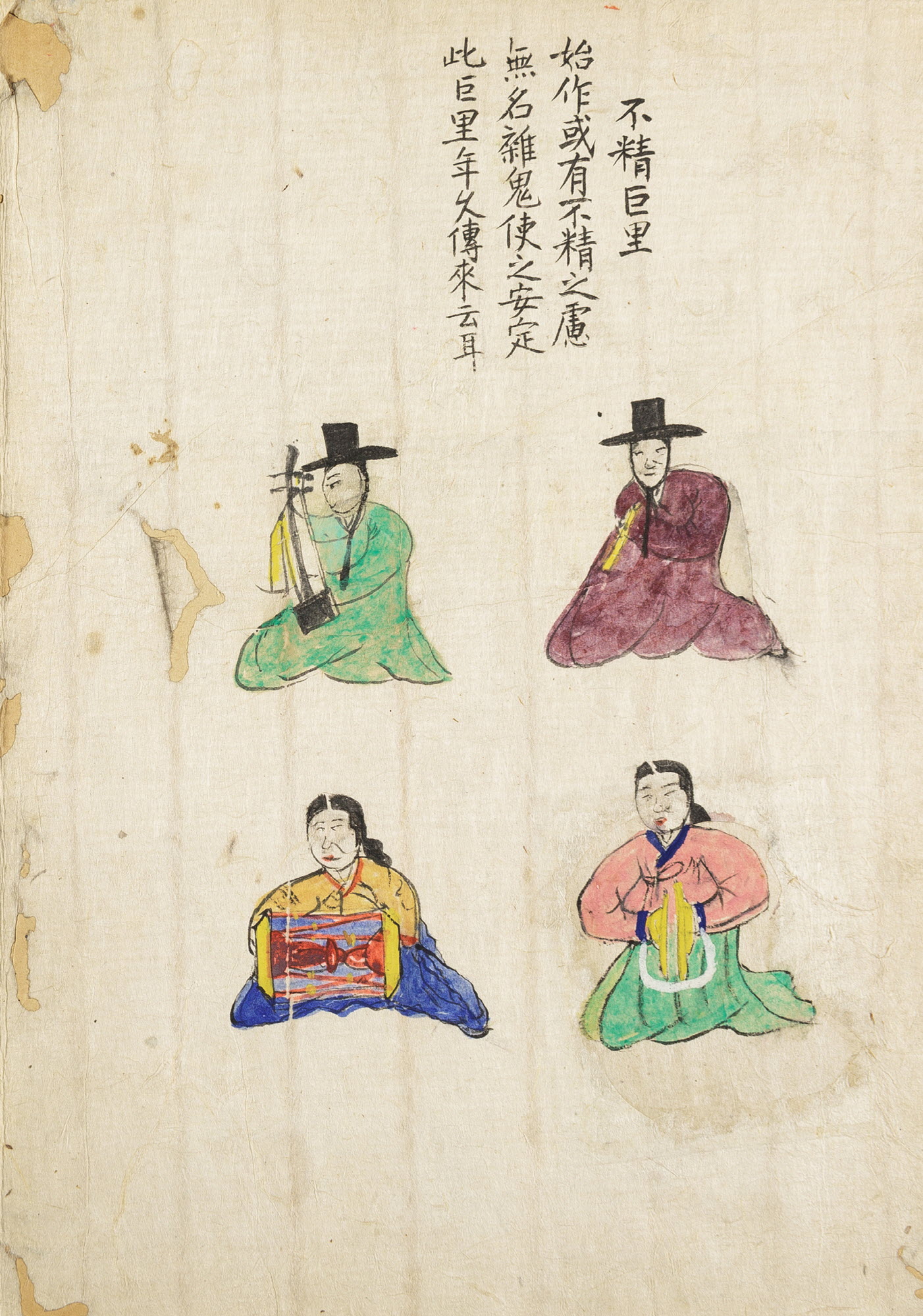
Plate 1. Bujeong-geori
(The Purification Ritual)
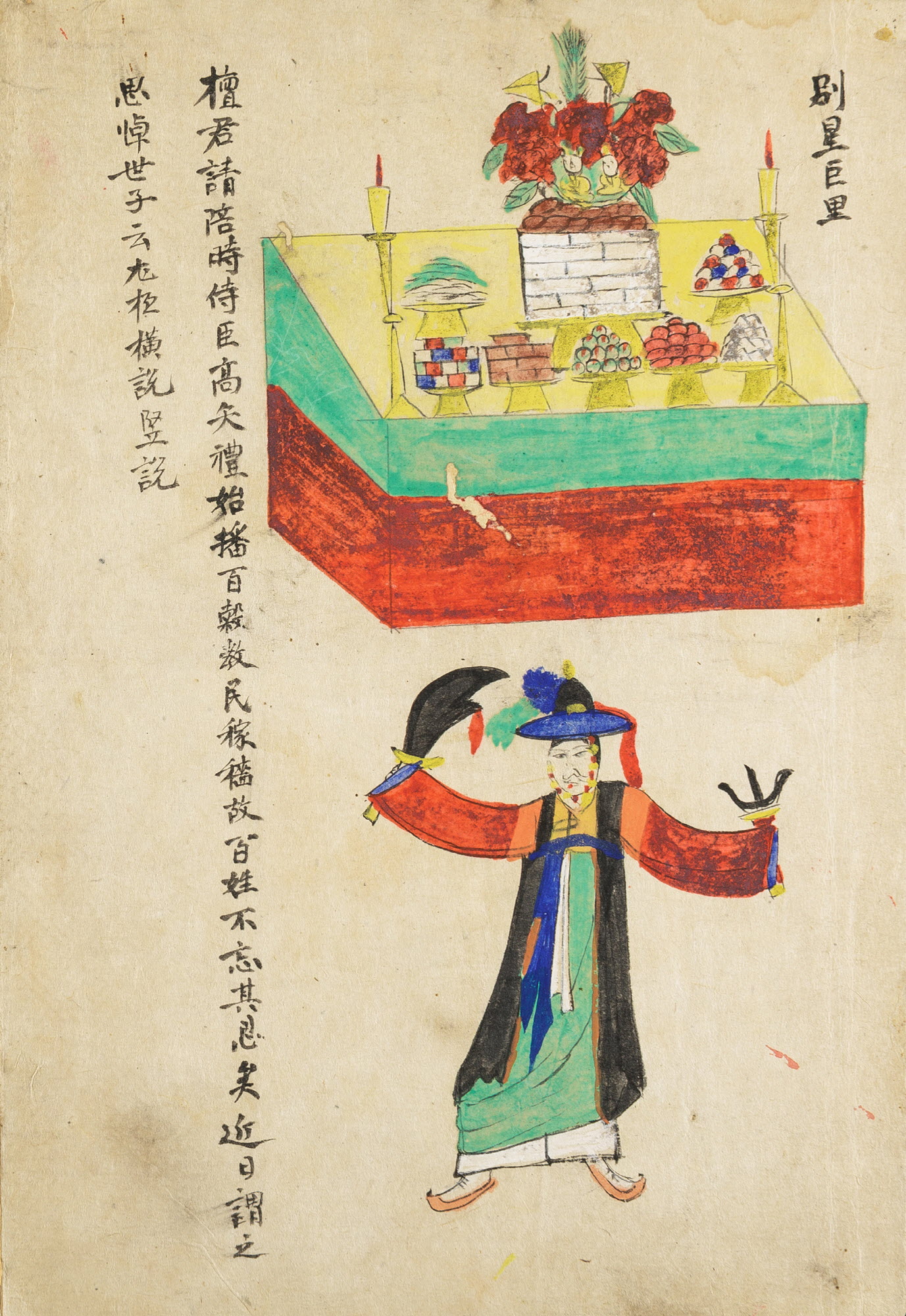
Plate 2. Byeolsang-geori
(Ritual for Warrior Spirits)
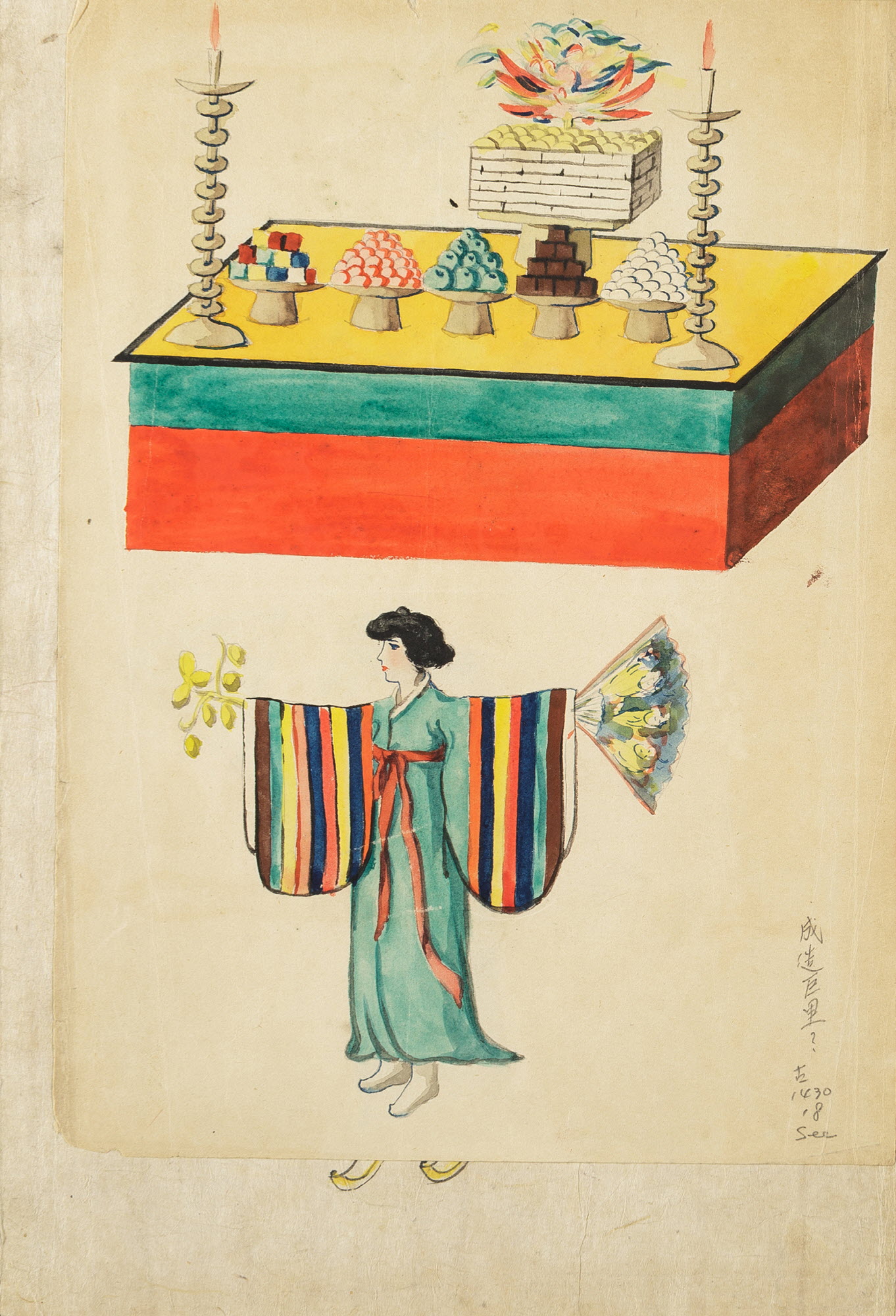
Plate 3. Changbu-geori
(Ritual for the Performer Spirit)
Source: Original plates from ‘Mudang-naeryeok’ (1928), Kyujanggak Archives. Credit: Prof. Seo Young-dae.
The Sensory Experience of the Gut
A Gut is a full-body experience. The rhythmic pounding of the Janggu (hourglass drum), the piercing cry of the Taepyeongso (oboe), and the vibrant silk robes (Hanbok) create a state of collective ecstasy. For the audience, it is a psychological release—a way to confront their fears and sorrows in a safe, communal space.
5. Modern Renaissance: From Taboo to Global K-Culture Icon
In 2026, shamanism is no longer a relic of the past. It has been rebranded as a sophisticated cultural asset, driven by the global success of the “K-Occult” genre.
The “K-Occult” Aesthetic in Media
“While films like ‘Exhuma’ (2024) directly center on the Mudang’s ritual power, dramas like ‘Phantom Lawyer’ utilize the lingering aura of shamanism as a narrative device. By setting a modern law office in a former shaman’s sanctuary, these stories suggest that ancient spiritual insights still have a place in solving the complex legal and psychological puzzles of the digital age.”
🎬 The Modern Reinterpretation: ‘Exhuma’ (2024) Trailer
Observe the intense performance of the modern Mudang in this trailer. It perfectly illustrates how traditional spiritual rituals are being reimagined as high-end visual art in K-Occult media.
Shamanism as “K-Counseling”
With approximately 300,000 to 500,000 shamans practicing in Korea, the profession is thriving. In the high-pressure environment of South Korea, many turn to Mudang for what is now called “K-Counseling.” A Mudang identifies the source of a person’s “Han” and provides a tangible ritual to resolve it. It is a form of spiritual therapy that bridges the gap between traditional belief and modern psychology.
The Future of the Tradition
As we see in the final episodes of Phantom Lawyer, the shamanic tradition is about Justice through Empathy. Whether through a courtroom battle or a 12-round ritual, the goal is the same: to hear the unheard and to heal the broken. As long as there is “Han,” there will be a Mudang to listen.
The Visual Brilliance: Shamanism as a Living Art Form
Beyond its role as a spiritual sanctuary, Korean Shamanism is a grand visual masterpiece that captivates the modern eye. The ritual, or Gut, is a multisensory performance where tradition meets high-energy artistry. Centered around the vibrant ‘Obang-saek’ (the five cardinal colors), a Mudang’s ritual attire—known as Sinbok—is a stunning display of Korean textile heritage, shifting dynamically with every rhythmic movement of the dance.
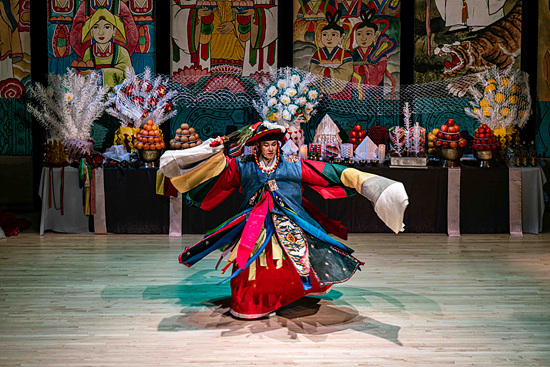
Photo by Taehyun Hwang / Courtesy of NEWSROH
🗽 Cultural Milestone in Manhattan
This 2026 Manhattan showcase of ‘Cheolmul-i Gut’ by Master Park Jung-wook marked a definitive moment where Korean ritual tradition was embraced as a world-class performing art. The sold-out event reflected the deep global curiosity toward the Spiritual Aesthetics of the Mudang.
#K-Culture #ShamanicArt #GlobalStage
The global appeal of this ‘Spiritual Performance’ was recently proven in the heart of Manhattan. In 2026, the Korean Cultural Center New York hosted a sold-out showcase of ‘GUT’, featuring Master Park Jung-wook. The overwhelming response—leading to emergency extra performances—highlights that the artistic heritage of the Gut transcends borders, resonating with a modern global audience seeking peace, harmony, and visual grandeur. It is no longer viewed solely through the lens of superstition; instead, it is celebrated as a cultural treasure of the Korean soul.

Sources & Official References
- Academy of Korean Studies (AKS): Encyclopedia of Korean Culture – “Mudang,” “Bari-gongju,” and “Gut.”
- National Folk Museum of Korea: The Research on Shamanic Mythology and Rituals (2022).
- Cultural Heritage Administration (CHA): Documentation of National Intangible Cultural Heritage No. 98.
- SBS Media Hub: Production Design and Cultural Consultation Reports for ‘Phantom Lawyer’ (2026).
- Kyujanggak Institute for Korean Studies (SNU): Digital Archives of Mudang-naeryeok (1928) – Plates of Bujeong-geori, Byeolsang-geori, and Changbu-geori.
- National Museum of Korea / Kansong Art Museum: Iconography of Shamanic Deities and Mural Paintings from the Goguryeo Dynasty (Gakjeochong).
- Overseas Koreans Newspaper & Broadcasting Editors Association (OKNB): Cultural Report on “The Aesthetics of Korean GUT” – Historical Context and Modern Performance.
- NEWSROH (Global Webzine): 2026 Manhattan Performance “GUT” Showcase – Field Photography by Taehyun Hwang at the KCCNY.
- Gugak Journal (Gukakshinmun): Visual Documentation of National Intangible Cultural Heritage No. 104, Seoul Saenam-gut.
- Showbox / Pinetown Production: Official Promotional Stills and Trailer for the Motion Picture Exhuma (2024).
🔮 Did the spiritual aesthetics of Korea move you today?
Your simple ‘Like’ is the greatest support for my deep research into
the hidden layers of K-Culture and its timeless traditions.
Tap ‘Like’ to keep the K-Trivia fire burning!