
Inside the Workout Secrets of Bloodhounds 2: Woo Do-hwan’s 13kg Bulk-Up & Lee Sang-yi’s 7% Body Fat.
- 1. Introduction: Why ‘Bloodhounds 2’ is the New Gold Standard for Netflix Action
- 2. The Men Behind the Fists: Cast Transformation Stories
- 3. Deep Dive I: The Neuroscience of ‘Switch-Hitter’ Boxing & HIIT Efficiency
- 4. Deep Dive II: The Cultural Power of ‘#O-Woon-Wan’ and ‘God-Saeng’
- 5. Deep Dive III: The Official ‘Hounds’ Workout Blueprint (3-Step Routine)
- 6. Conclusion: Discipline as the Ultimate Weapon
- 7. References & Official Sources
Official Trailer | Netflix
1. Introduction: Why ‘Bloodhounds 2’ is the New Gold Standard for Netflix Action
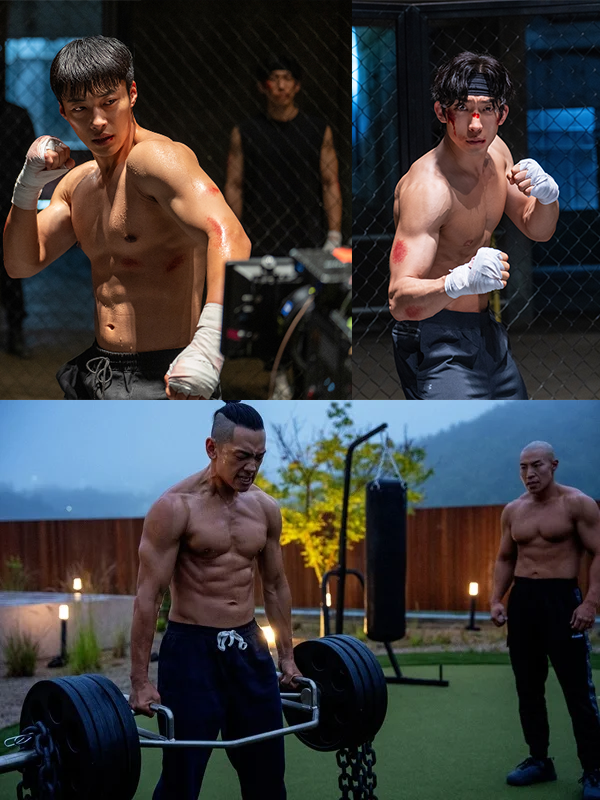
What does it take to gain 13kg of lean muscle while maintaining elite-level agility? The cast of Bloodhounds Season 2 didn’t just act; they underwent a scientific and cultural metamorphosis. This Bloodhounds Season 2 Workout guide takes a deep dive into the intense physical transformation of the cast and the cultural phenomenon surrounding the show.
When the first season of Bloodhounds hit Netflix, it was like a lightning bolt to the system for action fans. It had everything: heart, brotherhood, and some of the most visceral boxing choreography ever put to screen. But then comes the sequel. Often, sequels fail to live up to the hype, yet Bloodhounds 2 has managed to pull off a rare feat by outperforming its predecessor in both scale and intensity. Since its release on April 3rd, the series has held the No. 1 spot in South Korea for seven straight days and climbed to No. 2 globally in Netflix’s non-English TV category. We are talking about a show that has dominated the charts in 67 countries worldwide. This is not just a local hit; it is a global phenomenon that has effectively set a new gold standard for what a 19+ (Adults Only) action noir can be.
What makes this season so impactful is that it doesn’t just rest on the laurels of Season 1. While the first season focused on the gritty reality of predatory loan sharks, Season 2 expands the narrative into the brutal world of underground international illegal boxing leagues. This shift raises the physical stakes for the characters and the narrative scale for the audience. The chemistry between the leads, Geon-woo and Woo-jin, remains the emotional anchor, but everything around them has become heavier, bloodier, and more relentless. Even more impressive is that the success of the new season caused Season 1 to re-enter the Top 10 charts, creating a double-season resurgence that most showrunners can only dream of. It is clear that the raw, visceral combat combined with a story about resilience and loyalty has struck a chord with a global audience exhausted by over-produced CG (Computer Graphics) spectacles.
2. The Men Behind the Fists: Cast Transformation Stories
Woo Do-hwan’s Metamorphosis: The Journey to Gaining 13kg of Lean Muscle
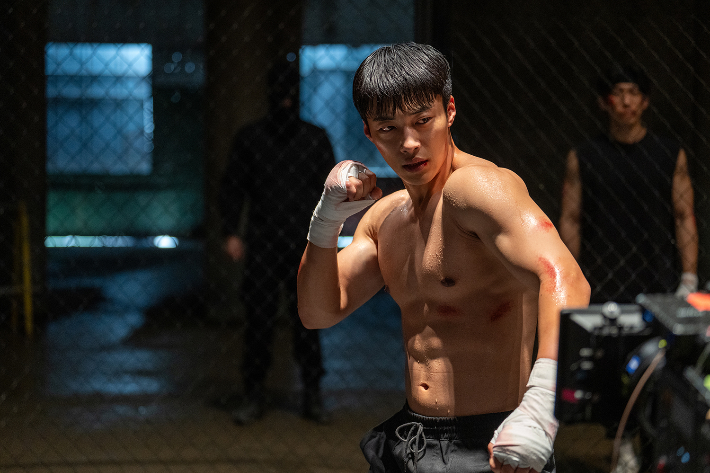
For Woo Do-hwan, returning as Kim Geon-woo was not just about memorizing lines; it was about physically embodying a character who has spent the last three years training to become a world-class champion. To reflect this passage of time and growth, Woo underwent a staggering metamorphosis, gaining 13kg (approximately 29 pounds) of lean muscle. He noted that while he had bulked up for Season 1 immediately after his military discharge, he added another 5kg on top of that for the sequel. His logic was simple: Geon-woo was a “boy” in the first season—a rookie who couldn’t even smile well. By Season 2, he needed to look like a man who has survived hell and is now stepping onto the world stage.
Achieving this look required a level of discipline that borders on the superhuman. Woo ate four full meals a day, often forcing himself to eat right before sleeping to ensure he didn’t lose weight through his intense exercise sessions. His diet was heavy on chicken breast and rice—four bowls a day, to be exact. He mentioned that if he really didn’t want to eat, he’d order something like Jikoba (a popular Korean charcoal-grilled chicken) just to keep the calories up. He spent his entire day exercising: action school in the morning, the gym at noon, and night runs during the humid midsummer to build stamina. Interestingly, Woo claims that building his body is actually “easier” than the acting prep because working out is a steady, visible build-up, whereas developing a character’s inner self is far more complex.

Lee Sang-yi’s Shredding Secret: Maintaining 7% Body Fat with the ‘Daiso Diet’
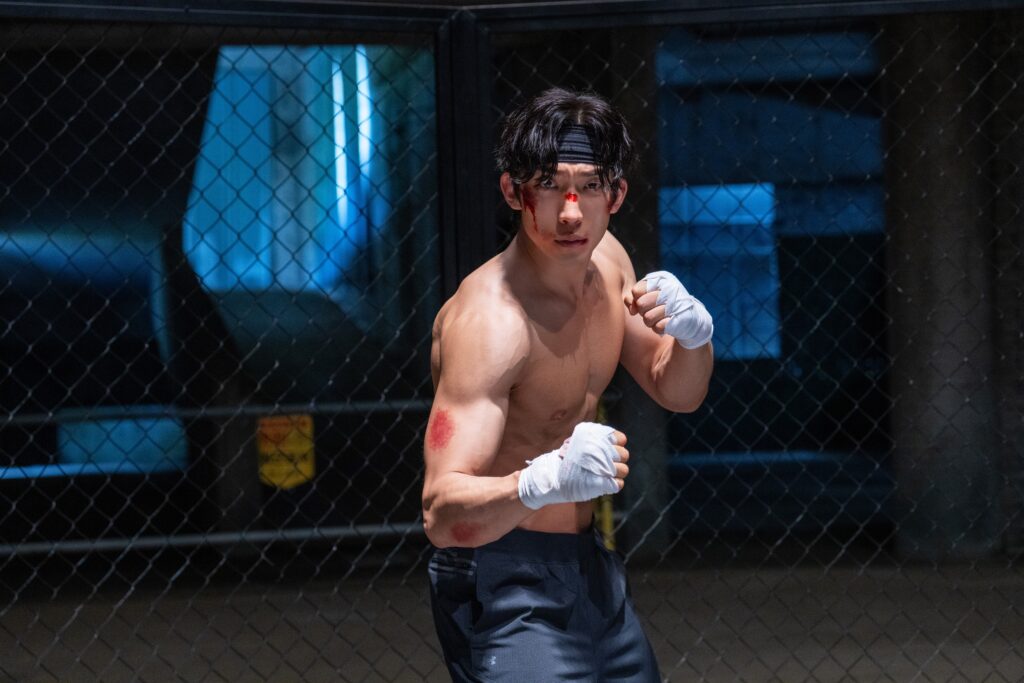
While Woo Do-hwan was bulking up, Lee Sang-yi had the task of maintaining a lean, shredded physique that screamed “elite coach.” Lee managed to keep his body fat in the 7% to 8% range, a level usually reserved for professional bodybuilders on competition day. He describes his approach as “flipping a switch.” For four to five days a week, he would stick strictly to diet food, allowing himself only one or two days to eat what he truly liked. This mental discipline allowed him to get back into fighting shape even faster than he did for the first season.
A key factor in achieving this level of definition was his disciplined nutritional routine, famously dubbed the ‘Daiso Diet.’ To regulate his intake with surgical precision, Lee utilized small, standardized plastic containers purchased from Daiso. His strategy involved pre-portioning brown rice into these specific containers and freezing them to ensure a consistent, non-negotiable caloric baseline for every meal. His daily regimen was stripped down to the essentials: brown rice, chicken breast, vegetables, and zero-calorie carbonated water. Lee noted in recent interviews that since he isn’t particularly picky with food, he was able to thrive on this repetitive cycle. This meticulous portion control using the “Daiso containers” was the secret weapon that allowed him to sculpt a world-class physique in a remarkably short timeframe.
The real challenge for Lee, however, was technical. In real life, Lee is right-handed, but his character Hong Woo-jin is a left-handed boxer. This meant he couldn’t just rely on “stage fighting” techniques. He had to retrain his brain and body to box as a southpaw (left-handed fighter). He spent months at the action school not just learning choreography, but studying real boxing mechanics—focusing on counter-punches and deceptive movements that could mess with an opponent’s mind. His goal was to move like a veteran who may not be as strong as he once was but compensates with wit and a single, decisive punch.

Rain (Jung Ji-hoon) as Baek-jeong: Mastering the Ambidextrous Villain at 40+
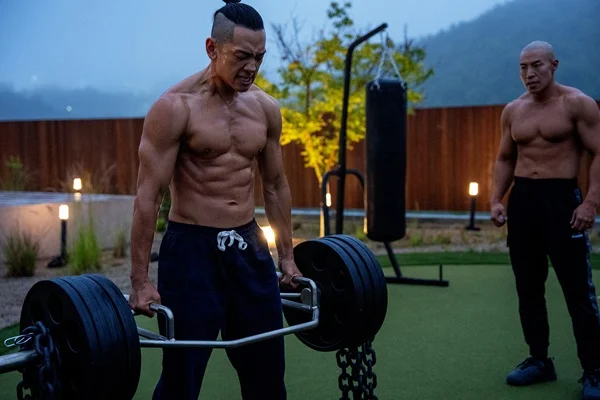
The addition of Rain (Jung Ji-hoon) as the main antagonist, Baek-jeong, added a whole new layer of intensity to the series. Playing a villain for the first time in his twenty-year career, Rain wanted to look like a “killing machine.” To achieve the massive, intimidating physique the director requested, Rain gained 6 to 7kg of muscle. At 44 years old, this was no small feat. He described his daily routine as a punishing cycle of reading the script and working out, over and over again. He pushed his body so hard that he spent much of the filming process on painkillers, suffering from chronic pain in his neck, back, and knees from 10-hour shooting days.
Rain’s commitment to the role extended to the fight mechanics as well. Unlike his previous roles that used ninja techniques or stylized martial arts, Bloodhounds required raw, technical boxing. He worked closely with Woo Do-hwan to match timings, often practicing until they reached the “limits of action.” Rain’s portrayal of Baek-jeong as a money-obsessed narcissist was so immersive that even his wife, Kim Tae-hee, reportedly told him his “eyes looked scary” at home. His passion left a deep impression on the younger cast, who watched him hit the gym even on his rest days, proving that his legendary work ethic hasn’t faded with age.
3. Deep Dive I: The Neuroscience of ‘Switch-Hitter’ Boxing & HIIT Efficiency
Woo Do-hwan vs. Jung Ji-hoon: Boxing Action Highlights | Bloodhounds Season 2 | Netflix
There is a fascinating scientific reason why the training shown in Bloodhounds 2—specifically Lee Sang-yi’s switch from right-handed to left-handed boxing—is so mentally taxing yet beneficial. When an athlete trains to be ambidextrous (using both hands with equal ease), they are essentially forcing the two hemispheres of their brain to communicate more effectively. This happens through the Corpus Callosum (a thick bundle of nerve fibers that connects the left and right sides of the brain). By engaging in complex, bilateral movements like switch-hitting, boxers improve the efficiency of this bridge, leading to better motor control, faster reaction times, and enhanced spatial awareness. It’s not just a physical trick; it’s a total neurobiological upgrade.
Furthermore, the “Hounds” style of training relies heavily on HIIT (High-Intensity Interval Training). This involves short bursts of near-maximal effort followed by brief periods of rest. The magic of HIIT lies in a phenomenon called EPOC (Excess Post-exercise Oxygen Consumption), or the “afterburn effect.” Research shows that intense interval training elevates your metabolic rate for hours, and sometimes even days, after the workout is finished. This means the actors were burning calories and oxidizing fat while they were sleeping or memorizing their scripts. Studies have shown that HIIT can induce significant increases in circulating BDNF (Brain-Derived Neurotrophic Factor), a protein that promotes the growth and survival of neurons. So, while Woo Do-hwan and Rain were pushing their bodies to the limit, they were also inadvertently boosting their “working memory” and cognitive functions—essential tools for any actor needing to nail complex fight choreography under pressure.
4. Deep Dive II: The Cultural Power of ‘#O-Woon-Wan’ and ‘God-Saeng’
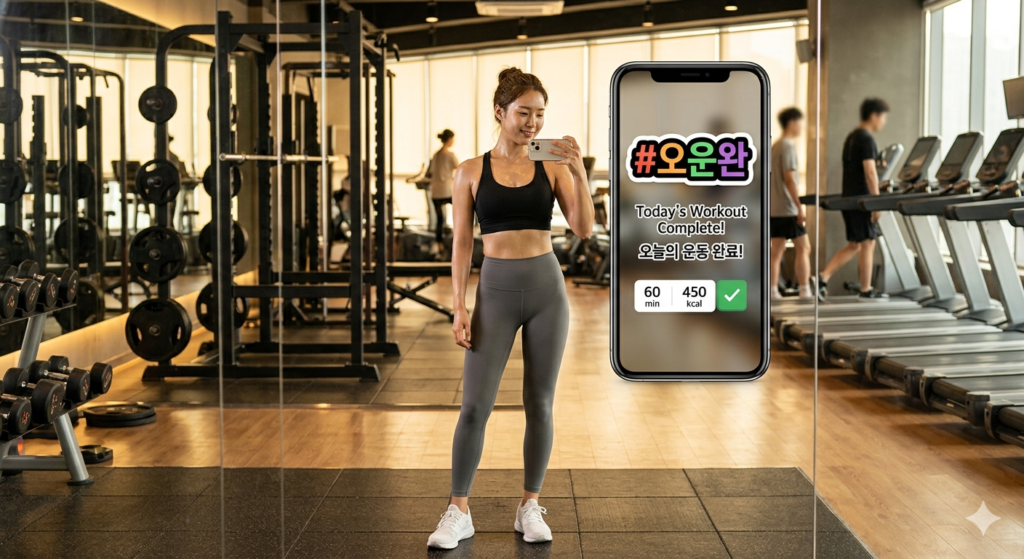
The physical transformations we see in Bloodhounds 2 didn’t happen in a vacuum; they are part of a massive cultural shift in South Korea toward the “God-Saeng” lifestyle. A portmanteau of “God” and “Saeng” (life), this trend among Gen Z (Generation Z) is about living your best life through small, consistent, productive habits. It’s not about achieving sudden wealth or fame; it’s about “drinking five glasses of water,” “making the bed,” and, most importantly, “exercise.” This mindset became a coping mechanism for the “COVID blues,” helping young people regain a sense of control over their lives when the world felt chaotic.
This is where the hashtag #O-Woon-Wan (Oh-Woon-Wan: an abbreviation for “Today’s Workout Complete” in Korean) comes in. It has become a badge of honor on social media, a way for people to role-model diligence for their peers. When fans see Woo Do-hwan gaining 13kg or Rain pushing through pain at 40+, it reinforces the God-Saeng philosophy that failure doesn’t weigh too heavily as long as you wake up and try again the next day. This cultural synergy is a big reason why the show resonates so deeply. It’s not just an action drama; it’s a reflection of a society that prizes discipline and the “small but definite sense of accomplishment” (Sohwakhaeng) that comes from physical effort. The actors aren’t just playing heroes; they are living out the “God-Saeng” ideals that their audience strives for every day.
5. Deep Dive III: The Official ‘Hounds’ Workout Blueprint (3-Step Routine)
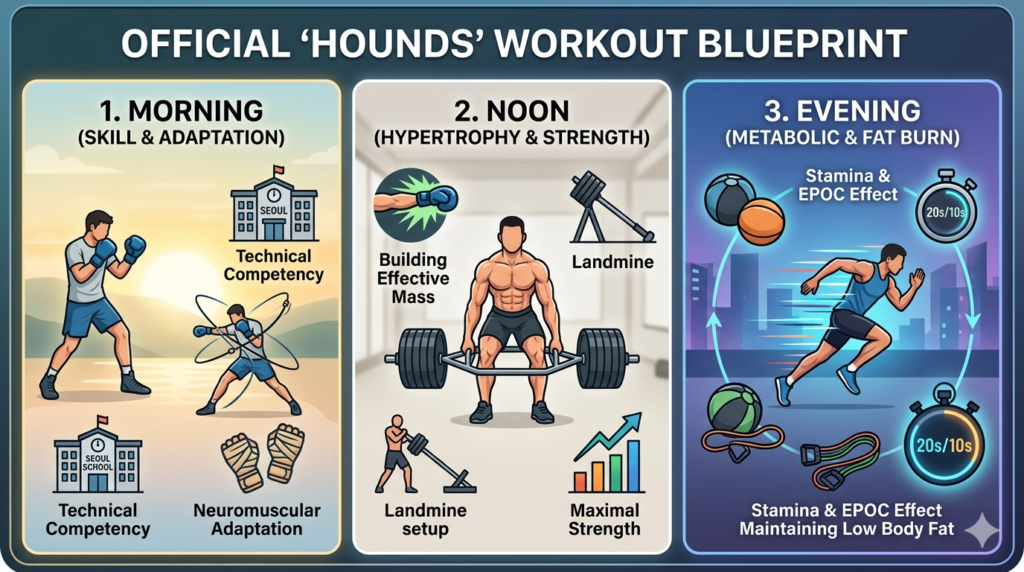
If you wanted to train like the cast of Bloodhounds 2, you wouldn’t just be lifting weights. Their routine is a sophisticated mix of technique, hypertrophy (muscle growth), and metabolic conditioning. The goal is to build “effective mass”—muscle that doesn’t just look good but produces explosive force. Research suggests that the most powerful punches come from a “second pulse” of muscular activation where the arm and torso stiffen immediately before impact, creating a larger impulse. To achieve this, the training must be split into functional segments.
The following table outlines the 3-step routine based on the actors’ disclosed preparation and the standard protocols used at institutions like the Seoul Action School.
| Time of Day | Phase | Focus & Exercises | Goal |
|---|---|---|---|
| Morning | Technical & Skill | Boxing fundamentals, Southpaw drills, Wire action, Choreography practice at Seoul Action School. | Neuromuscular adaptation & technical competency. |
| Noon/Afternoon | Hypertrophy & Strength | Compound lifts: Squats, Trap-bar deadlifts, Bench press (>80% 1RM). Weighted punches, Landmine rotations. | Building “Effective Mass” and absolute maximal strength. |
| Evening/Night | Metabolic & Fat Burn | Night runs (stamina), HIIT sessions (20s sprint/10s rest), Circuit training with med balls and bands. | Stamina building and maintaining low body fat (EPOC). |
This routine emphasizes that punching power is actually generated in the legs and transferred through the trunk via rotation. Therefore, absolute strength in the lower body (Isometric Mid-Thigh Pull) is more correlated with punch force than upper body strength alone. If you want to punch like Geon-woo, you need to stop skipping leg day.
6. Conclusion: Discipline as the Ultimate Weapon
Bloodhounds 2 is a testament to the fact that K-Action (Korean Action) is not just about cool camera tricks or flashy CG; it is about a systemic commitment to realism and discipline. The success of the show is built on the broken sweat and literal pain of actors who refuse to use stunt doubles for the sake of authenticity. When Woo Do-hwan says that building his body was “easier” than the script, he’s highlighting a core truth: in the world of K-Noir, the body is a tool that must be sharpened with the same precision as a blade. This level of dedication creates a powerful social learning effect, motivating fans worldwide to embrace their own “God-Saeng” journeys.
Ultimately, the “Hounds” remind us that discipline is the ultimate weapon. Whether it is Rain overcoming the physical limitations of his 40s, or Lee Sang-yi mastering a completely new dominant hand, the message is clear: growth requires discomfort. As you look at the chart-topping success of Bloodhounds 2, remember that it wasn’t just luck—it was 13kg of muscle, 7% body fat, and a relentless refusal to take the easy way out. That is the new standard, and it’s here to stay.

7. References & Official Sources
- Netflix Korea Official Reports: Data regarding global ranking and viewership counts (2026).
- Maeil Business Newspaper (MK): Official interviews with Jung Ji-hoon (Rain) and Lee Sang-yi regarding their transformations and ad-libs.
- ChosunBiz (OSEN): Technical interview with Woo Do-hwan on his 13kg bulk-up and dietary routine.
- Journal of Strength and Conditioning Research: “The role of strength on punch impact force in boxing” by Beattie & Ruddock (2022).
- International Journal of Academic Research in Progressive Education and Development: “The Effectiveness of High-Intensity Interval Training (HIIT)” (2024).
- International Journal of Environmental Research and Public Health: “Acute Effects of HIIT on BDNF, Cortisol and Working Memory” (2020).
- Seoul Action School: Official program information and industry background.
- Hankyoreh: Analytical report on the “God-Saeng” lifestyle and Gen Z trends in South Korea.

🥊 Did the Hounds’ transformation inspire your journey?
Your ‘Like’ keeps the discipline alive!
It fuels my deep dives into the science of K-Action and the ‘God-Saeng’ lifestyle.
Tap ‘Like’ to join the Hounds’ next mission!