
- 1. Why This Story Still Draws Attention
- 2. Early Life: Royal Lineage and Personal Loss
- 3. Political Instability and the 1453 Coup
- 4. Abdication, Exile, and Life in Yeongwol
- 5. Death and Historical Interpretation
- 6. Aftermath and the Reign of King Sejo: Power without Peace
- 7. Conclusion: How We Remember Danjong Today
1. Introduction: Why This Story Still Draws Attention
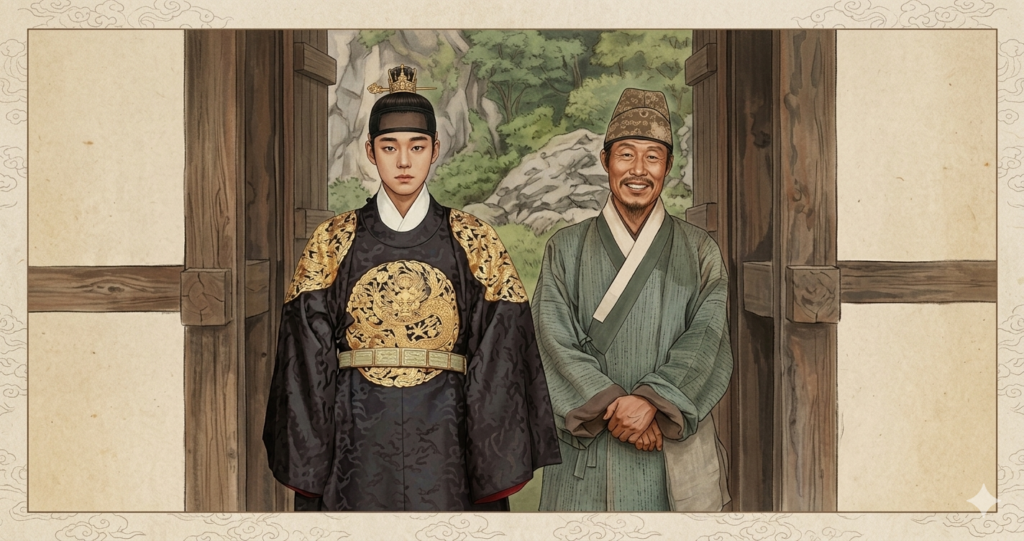
In 2026, the film “The King’s Warden” drew significant attention, surpassing 14 million admissions and ranking among the highest-grossing films in Korea. International audiences also responded strongly, even those unfamiliar with the Joseon Dynasty.
Personally, when the film was just crossing the 2 million mark, I went to the theater with a simple expectation: that any movie starring the renowned actor Yoo Hae-jin would be well worth the watch. However, what I encountered was far more profound than anticipated. I found myself struggling to hold back tears, trying my best not to let the person sitting next to me notice how deeply the story had moved me.
Beyond cinematic interpretation, the historical figure at the center of the story—King Danjong—continues to be studied and revisited. His life combines real political history with the story of a young boy forced to face power and responsibility far too early. To understand the roots of this enduring tragedy, let us take a sequential look at the life of King Danjong.
2. Early Life: Royal Lineage and Personal Loss
The Birth of a Legitimate Heir
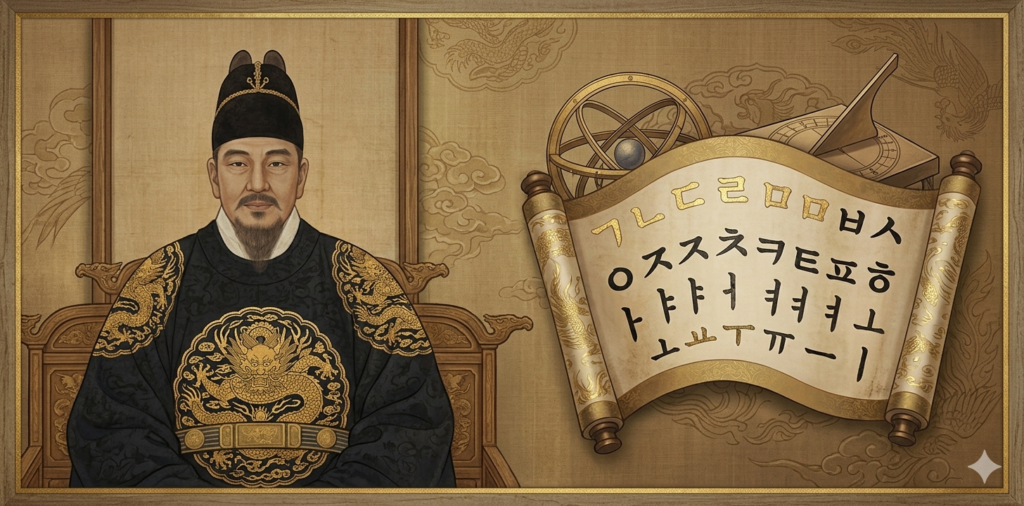
Born in 1441 as Yi Hong-wi, Danjong was the legitimate heir of the royal line, being the grandson of King Sejong the Great (widely known for creating the Korean script, Hangeul) and the son of Crown Prince Munjong. In the context of Joseon’s Confucian system, this lineage placed him in a position of clear succession.
Historical records, including The Annals of King Sejong(Sejong Sillok), suggest that King Sejong showed great affection for his grandson, often keeping him close and taking a personal interest in his upbringing.
A Childhood Marked by Loss
Despite his strong lineage, Danjong’s early life was marked by repeated loss. His mother, Queen Hyeondeok, died shortly after childbirth, followed by the deaths of King Sejong and, soon after, King Munjong, whose reign was brief.
As a result, Danjong ascended the throne at around the age of 12, without strong senior royal figures to support or protect him politically.
3. Political Instability and the 1453 Coup
Limited Authority of a Young King
Due to his age, much of the actual governance fell into the hands of senior officials. This period is often associated with a system known as Hwangpyo Jeongsa.
In simple terms, key decisions were largely prepared in advance by ministers. The king’s role was often limited to approving choices that had already been indicated—sometimes marked with a small “yellow sign” (hwang-pyo).
While this approach was presented as a way to support a young ruler, it also meant that Danjong had very little real authority in state affairs.
The Rise of Prince Suyang
Among the royal family, Prince Suyang gradually expanded his influence. He was the second son of King Sejong the Great, the younger brother of King Munjong, and the uncle of the young King Danjong.
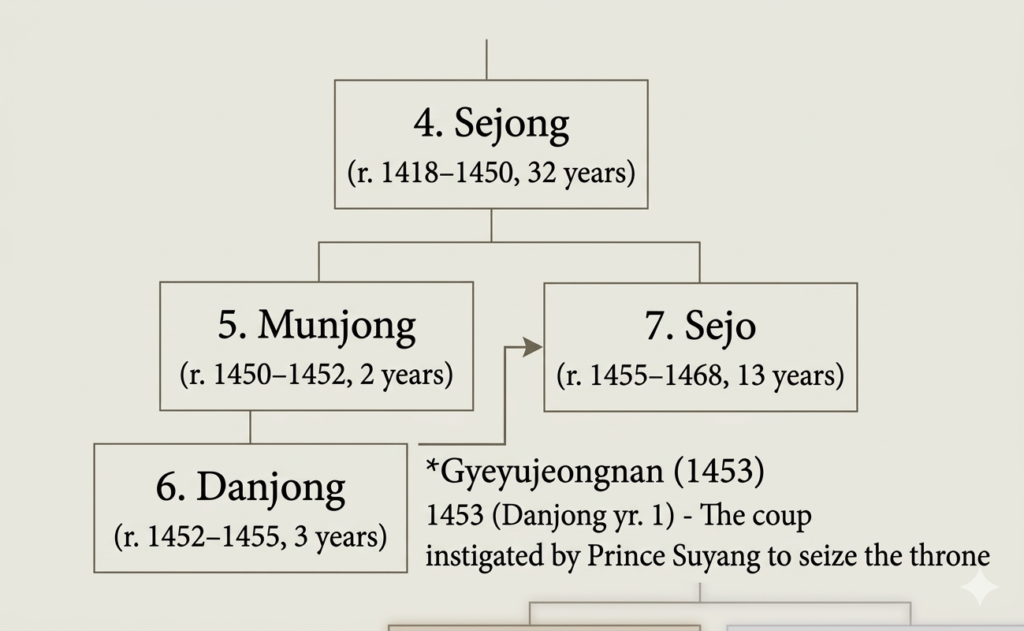
From today’s perspective, it may seem unusual that a man in his 30s had to serve a 12-year-old king. But in the Joseon Dynasty, succession followed a strict primogeniture system, where the throne passed to the eldest legitimate son. As the only son of King Munjong, Danjong’s position as king was not in question, regardless of his age.
Suyang, however, was not satisfied with this arrangement. He was known as both a capable military leader and a well-educated prince, and he appears to have viewed the rule of a child-king as a potential risk to political stability. Over time, he strengthened his position through diplomatic activity and by building alliances with figures who were increasingly dissatisfied with the existing power structure.
Gyeyujeongnan (1453)
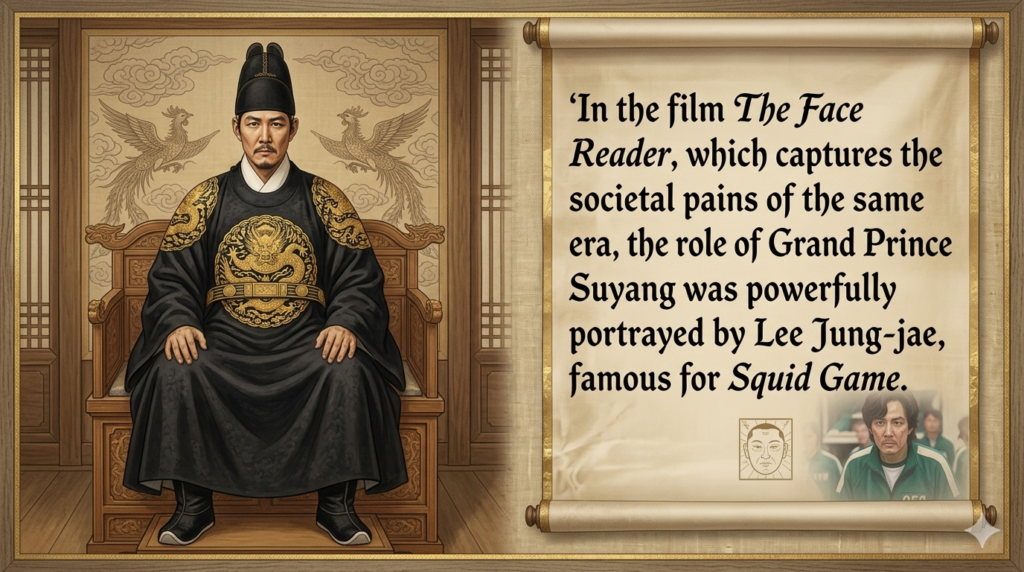
In October 1453, Prince Suyang initiated a coup known as Gyeyujeongnan. His primary target was General Kim Jong-seo, a key political figure who played a central role in the Hwangpyo Jeongsa system. By influencing royal appointments, Kim had become one of the most powerful figures in Joseon. Suyang used this as justification for his actions and personally oversaw Kim’s assassination at his residence.
After this, Danjong remained on the throne for a time, but his authority became largely symbolic. The shift in power became clear when Prince Suyang was appointed as Prime Minister (Yeong-ui-jeong), taking control of both military and administrative affairs. While the young king remained in the palace, Suyang effectively exercised power at the highest level.
4. Abdication, Exile, and Life in Yeongwol
Abdication and Status Change
In 1455, the situation reached a turning point. Although official records describe the event as a voluntary transfer of power, historical context suggests that Danjong was forced to abdicate under significant pressure and the threat of further conflict. He handed over the royal seal to his uncle, Prince Suyang, who then became King Sejo.
The situation worsened the following year. A group of loyal officials, later known as the Sayuksin (The Six Martyred Ministers), attempted to restore Danjong to the throne. The plot was discovered, and they were executed after refusing to recognize Sejo as king. Their actions are widely regarded as a symbol of loyalty in Korean history.
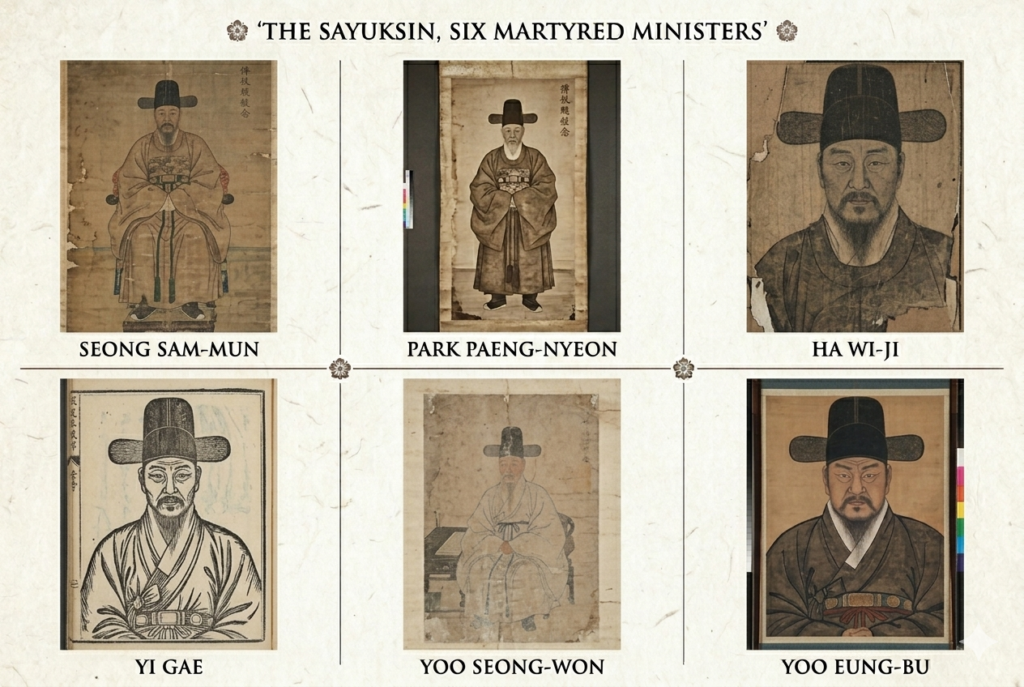
After this failed attempt, Danjong’s status was formally reduced. He was stripped of his royal title and given the designation “Nosan-gun.” Within the Joseon system, this title was typically assigned to non-heir princes or those removed from power, reflecting a clear loss of status. He was later exiled from the capital, Hanyang.
Cheongnyeongpo: A Beautiful Prison of Eternal Solitude
Danjong was sent to Cheongnyeongpo in Yeongwol, Gangwon Province. Today, Yeongwol is known for its quiet scenery and has become a popular destination for visitors. Five centuries ago, however, the same landscape carried a very different meaning.
Surrounded on three sides by the Namhangang River and enclosed by steep cliffs, Cheongnyeongpo was effectively isolated. For Danjong, it functioned as a place of confinement. He spent much of his time in a small thatched house, looking out across the water that separated him from the capital.
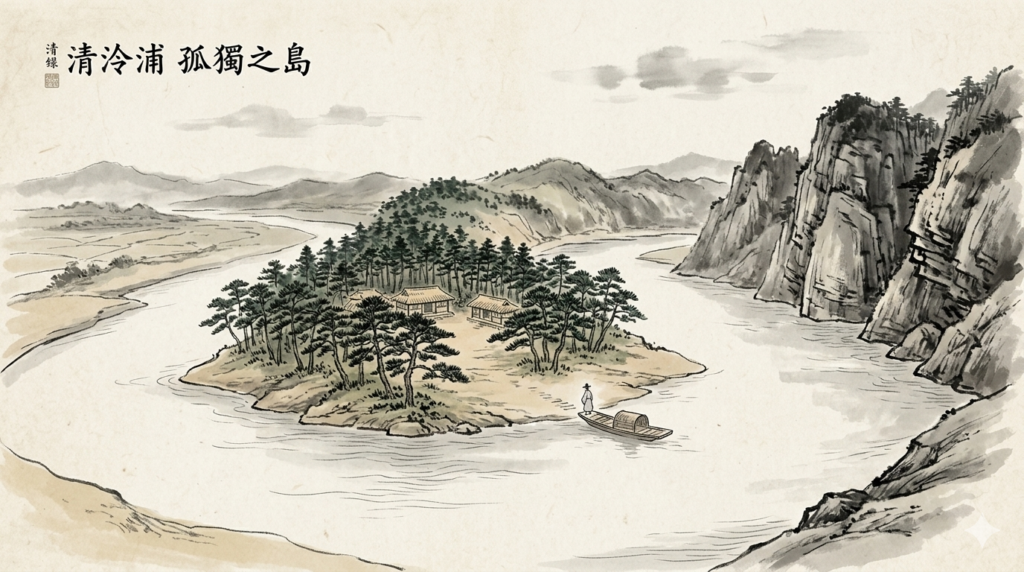
capturing the historical atmosphere of King Danjong’s exile.
5. Death and Historical Interpretation
The Enigmatic End: Death and Historical Debate
Danjong died in 1457 at the age of 16. The official records from the The Annals of King Sejo describe his death in a surprisingly brief and detached way. According to this account, after hearing of yet another failed attempt to restore him to the throne, he took his own life by hanging in exile.
Yet this short entry raises more questions than it answers. The lack of detail feels unusual, especially for the death of a former king. Perhaps that is why, over time, different interpretations began to emerge. In the film, this uncertainty is given significant weight, shifting the perspective from a simple act of despair to something far more political.
One widely discussed interpretation is that Sejo chose to eliminate any remaining threat by sending royal poison. Another, more unsettling account suggests that when the envoy hesitated, someone else carried out the act—strangling the young king with a bowstring while he slept.
These accounts, of course, come from unofficial sources and cannot be confirmed as historical fact. Still, they reflect an enduring suspicion: that Danjong was never truly free from the reach of power, even in exile.
In the end, his death remains unresolved. Whether it was a final act of despair or a quiet act of political necessity, the uncertainty itself continues to shape how we remember him—and deepens the tragedy of his short life.
The Final Act of Loyalty: The Burial and the Legend of Eom Heung-do
In the days following Danjong’s death, the fear surrounding the former king did not simply disappear. According to later accounts, King Sejo issued a strict order forbidding anyone from recovering or burying his body, warning that violators—and even their families—would face severe punishment. As the story goes, the young king’s body was cast into the Donggang River and left without proper rites.
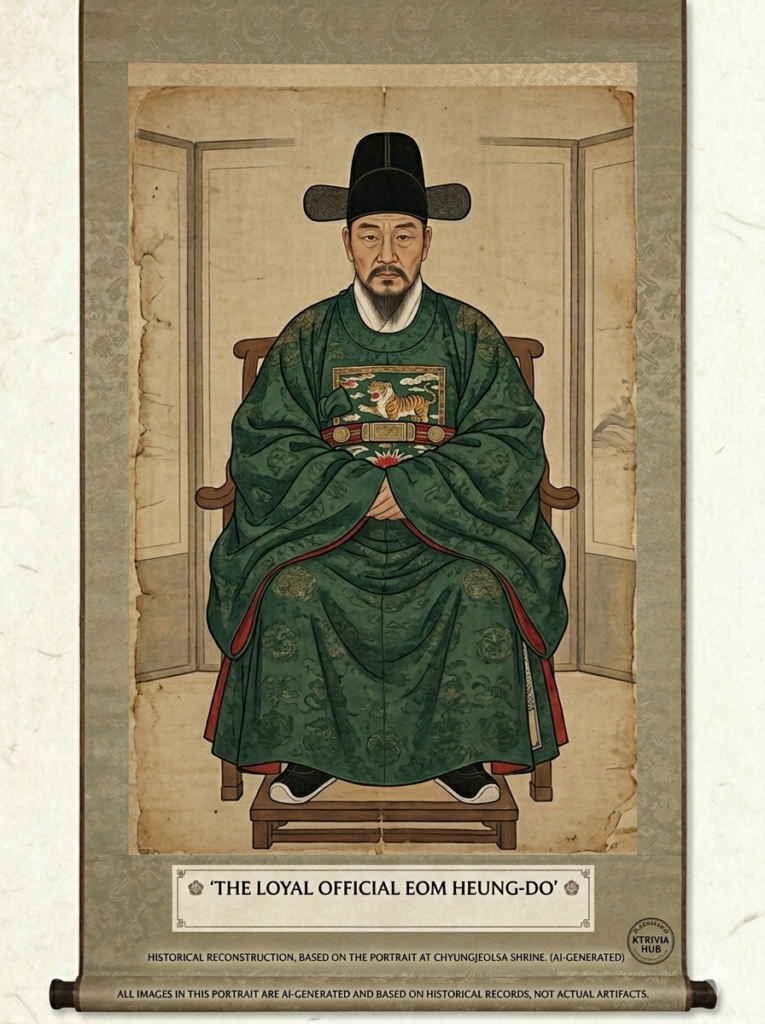
It is here that the story of Eom Heung-do begins. Remembered as a minor local official, he is said to have stepped forward despite the risks. Acting out of a sense of duty and loyalty, he retrieved Danjong’s body from the river and carried it away under the cover of night. The journey through Yeongwol’s mountains is often described as long and difficult, made more daunting by the danger he knowingly faced.
One detail, often retold in local tradition, adds a quiet, almost symbolic layer to the story. While searching for a place to bury the body, Eom reportedly came across a deer resting on the snow. When the animal ran off, he noticed that the ground beneath it was not frozen like the rest. Taking it as a sign, he chose that very spot for the burial, completing the task in haste before going into hiding.
These accounts do not come from official records but from stories that have been passed down over time. Because of that, it is hard to separate fact from embellishment. Still, the story of Eom Heung-do has endured, not so much as a verified historical report, but as a reflection of how people chose to remember that moment.
In the film The King’s Warden, this episode is given particular emphasis, portraying the burial as a quiet but powerful act set against the weight of royal authority. Today, the site believed to be associated with this story is Jangneung, where Danjong is said to rest. Whether every detail is historically accurate or not, the story continues to be told as an example of loyalty that persisted even in the shadow of power.
6. Aftermath and the Reign of King Sejo: Power without Peace
King Sejo, despite the violent path that brought him to the throne, proved to be a highly capable ruler. Once in power, he pushed forward a series of reforms that would shape the middle period of the Joseon Dynasty. He introduced the Jikjeon-beop to stabilize state finances and oversaw the compilation of the Gyeongguk Daejeon, a legal code that would serve as the backbone of governance for generations. Under his rule, the kingdom saw stronger military organization and a more stable economy, reflecting his decisiveness as a leader.
Yet these achievements did not bring him peace. As time passed, his later years were marked by suffering and unease. He was afflicted with a severe and persistent skin disease that spread across his body, causing constant pain—something even the best physicians at court could not cure.
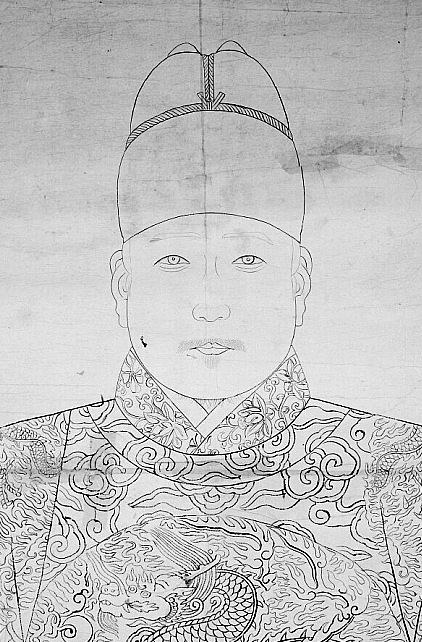
Stories that circulated afterward tried to make sense of this suffering. Some said that the spirit of Queen Hyeondeok, Danjong’s mother, appeared in his dreams and cursed him, after which his illness began. Others pointed to the untimely deaths within his own family, including that of Crown Prince Uigyeong, as part of the same shadow that followed him.
Modern historians tend to see these accounts less as factual records and more as reflections of how people understood his reign. Even so, they reveal a lingering belief that actions carry consequences—that power, no matter how absolute, does not place a person beyond judgment.
In the end, Sejo’s final years are often remembered not only for what he achieved, but also for the burden he seemed to carry. It is a reminder that authority may secure a throne, but it does not always bring peace.
7. Conclusion: How We Remember Danjong Today
It took 241 years after his death for Danjong to finally have his title as King restored during the reign of King Sookjong. Because of this long-delayed recognition, we remember him today not as the demoted “Nosan-gun,” but as King Danjong.
Considering how short and turbulent his life was, it’s hard to know how much of it could truly be preserved in precise detail within official records. Still, when we piece together historical consensus, publicly available research, and the stories that have continued to be told, a more complete picture begins to take shape—something close to what has been outlined above.
Even a tragic life is never made up of sorrow alone. The recent film captures the final moments of Danjong’s life in a way that feels both grounded and human, blending the everyday lives of Yeongwol’s people with the quiet but unmistakable dignity of the young king in exile. It’s the kind of story that resonates beyond its historical setting.
One small piece of advice, though—this might not be the best film to watch with just anyone. If I watch it again, I think I’d rather do so on my own, without having to worry about anyone else while trying to hold back tears.
Sources & Notes:
This article is based on Joseon Dynasty records, including the Annals of the Joseon Dynasty, and modern academic interpretations from Encyclopedia of Korean Culture. Certain events and descriptions may vary depending on historical sources and later narratives. And some images are based on the pictures from Showbox.
Support the direction and pace of this series!
Your feedback has a profound impact on the research direction and upload frequency of my future posts. By showing your support, you directly help prioritize the next historical chronicle.
Please click the heart below to support this chronicle!

👑 Did you find the historical journey of King Danjong moving?
Your ‘Like’ is a great encouragement for our journey to uncover the hidden stories and historical depths of Korea’s past.
If you want to keep exploring more exciting K-trivia, please press the button below!